

The Employee Visa Program™

Sponsor the people your U.S. business actually runs on.

For U.S. businesses sponsoring foreign employees in executive, managerial, treaty, or specialized-knowledge roles. We handle the position analysis, the documentation, and the attorney coordination, so your hire can start on Day 1.

Visa Franchise client Visa Franchise client Visa Franchise client

1,200+ entrepreneurs served across 80+ countries

Which nonimmigrant category fits?

The program covers all four, plus the EB-1C residency path. The right category is confirmed with the independent immigration attorney during intake.

Visa Best for Treaty country required Max stay Typical timeline
TreatyE-2 Essential Employee Executives, managers, or specialized-knowledge employees of an E-2 enterprise Yestreaty investor country Renewable indefinitely (2 to 5 yr per country) ~6 monthsfrom signing
TreatyE-1 Treaty Employee Executives, managers, or essential-skill employees of a qualifying E-1 trader Yestreaty trader country Renewable indefinitely (2 to 5 yr per country) ~6 monthsfrom signing
IntracompanyL-1A Intracompany transferee in an executive or managerial role No Up to 7 years ~6 monthsfrom signing
IntracompanyL-1B Intracompany transferee with specialized knowledge No Up to 5 years ~6 monthsfrom signing

Why sponsorship, why now

The hiring lane most U.S. employers never look at

Most companies picture one thing when they decide to sponsor: the H-1B lottery, once a year, with odds they do not control. Treaty and intracompany categories run on a different calendar. It is the most underutilized mechanism in employer sponsorship.

35%

H-1B selection rate, FY2026 cap

USCIS selected 118,660 of 336,153 registered beneficiaries. Two out of three went nowhere.

77,249

L-1 visas issued in FY2025

Up 7.6% over FY2024, within 2.6% of the FY2016 baseline. No cap, no registration window.

$100K

Attached to certain new H-1B petitions

A supplemental payment on certain new H-1B petitions for beneficiaries abroad, in litigation through 2026.

No PERM

On the EB-1C residency path

Per USCIS, the multinational manager and executive category skips labor certification.

Sources: USCIS FY2026 H-1B cap data; U.S. Department of State FY2025 nonimmigrant visa statistics; USCIS EB-1 guidance. Whether a category applies to your company is a legal question the independent immigration attorney assesses.

The problem

The role is the case, and most companies write it for hiring

Sponsorship rarely stalls because the company is not real. It stalls on how the position was documented, and on who owned the pieces between the offer letter and Day 1.

01
Risk 01

The job description was written for LinkedIn

Executive, managerial, essential-skill, and specialized-knowledge roles are each documented differently. A description written to attract candidates rarely holds what the file needs, and rewriting it later looks like what it is.
02
Risk 02

The wrong structure costs twice

Adam and Bo Tait were ready to file as two investors in the same business. The attorney showed them the cost: double the capital at risk. Structure gets decided once.

03
Risk 03

Nobody owns the space around the filing

Payroll, I-9, state registration, the SSN, the dependent visas. The attorney files the petition. Everything around it lands on an HR manager doing it for the first time.

Choose your path

Two ways to sponsor your team

One process, two destinations. The independent immigration attorney confirms which one fits during intake.

Nonimmigrant

Nonimmigrant employee sponsorship

Best for U.S. employers sponsoring an employee under a nonimmigrant visa category: E-2 treaty essential, E-1 treaty, L-1A executive or managerial, or L-1B specialized knowledge.

Position analysis & strategy

  • Strategy session with the assigned independent immigration attorney
  • Position eligibility assessment for the role and visa category

Documentation

  • Business plan addendum
  • Job offer letter, organizational chart, financials, compliance attestations
  • Personal and employment document collection for the sponsored employee

Filing

  • Independent immigration attorney coordination
  • Clerical document preparation for the attorney's use
  • Petition filed with USCIS or the U.S. Consulate by the assigned attorney

Client support

  • Dedicated client manager via WhatsApp
  • Employer onboarding checklists (payroll, I-9, state registration)
  • Employee onboarding checklists (SSN, driver's license, dependent visas)
Permanent residency

EB-1C permanent residency

Best for U.S. employers sponsoring an executive or manager who has worked at a qualifying foreign affiliate for at least one year. Permanent residency pathway.

Position analysis & strategy

  • Strategy session with the assigned independent immigration attorney
  • Multinational manager or executive eligibility assessment (qualifying foreign affiliate, one year of prior employment)

Documentation

  • Business plan addendum
  • Job offer letter, organizational chart, financials, compliance attestations
  • Personal and employment document collection for the sponsored employee

Filing

  • Independent immigration attorney coordination
  • Clerical document preparation for the attorney's use
  • I-140 petition filed with USCIS by the assigned attorney

Client support

  • Dedicated client manager via WhatsApp
  • Employer onboarding checklists (payroll, I-9, state registration)
  • Employee onboarding checklists (SSN, driver's license, dependent visas)

Success stories

Employees who came over as employees

Two companies that filed the person as an employee instead of a second investor.

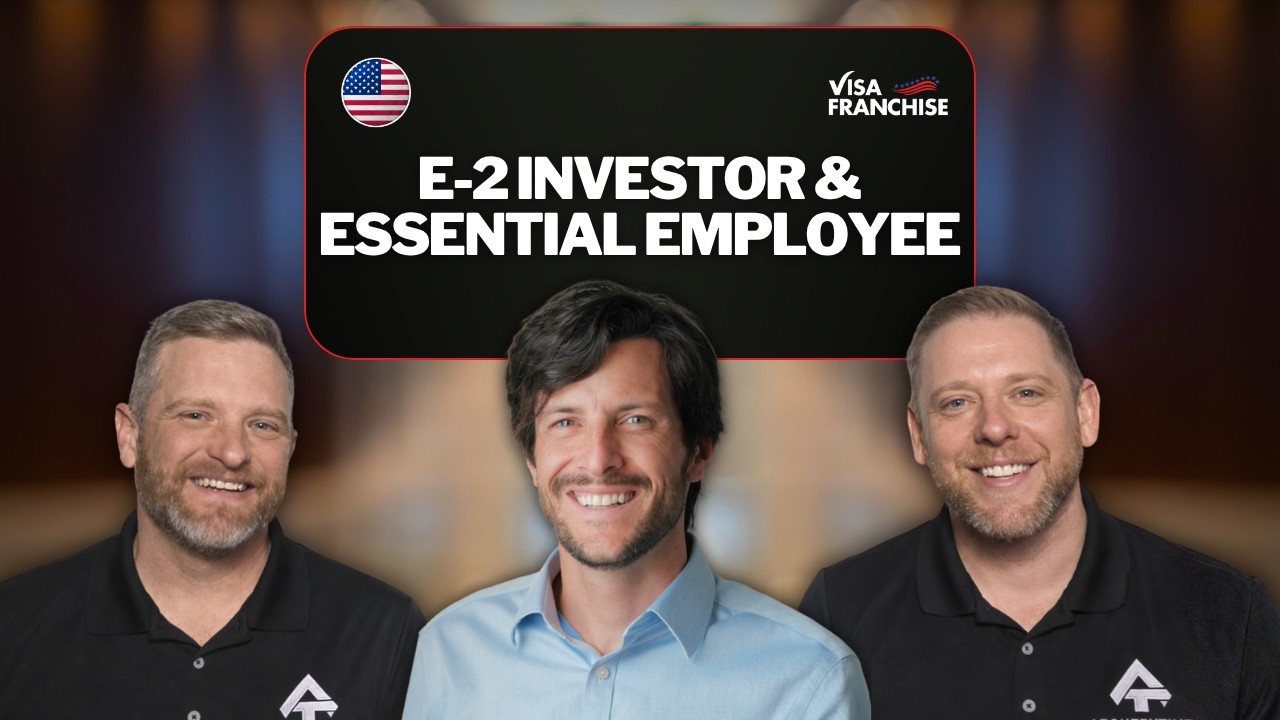
Adam and Bo Tait of ArcheryTime with Patrick Findaro
Canada E-2 essential employee ArcheryTime, Michigan

Adam & Bo Tait

Brothers and business partners, Sarnia to Port Huron

"We would essentially have to double it."

Adam filed as the E-2 investor. Bo was going to file as a second investor until the attorney laid out the cost. He came over as an essential employee instead and now runs U.S. operations as COO.

Watch their story →
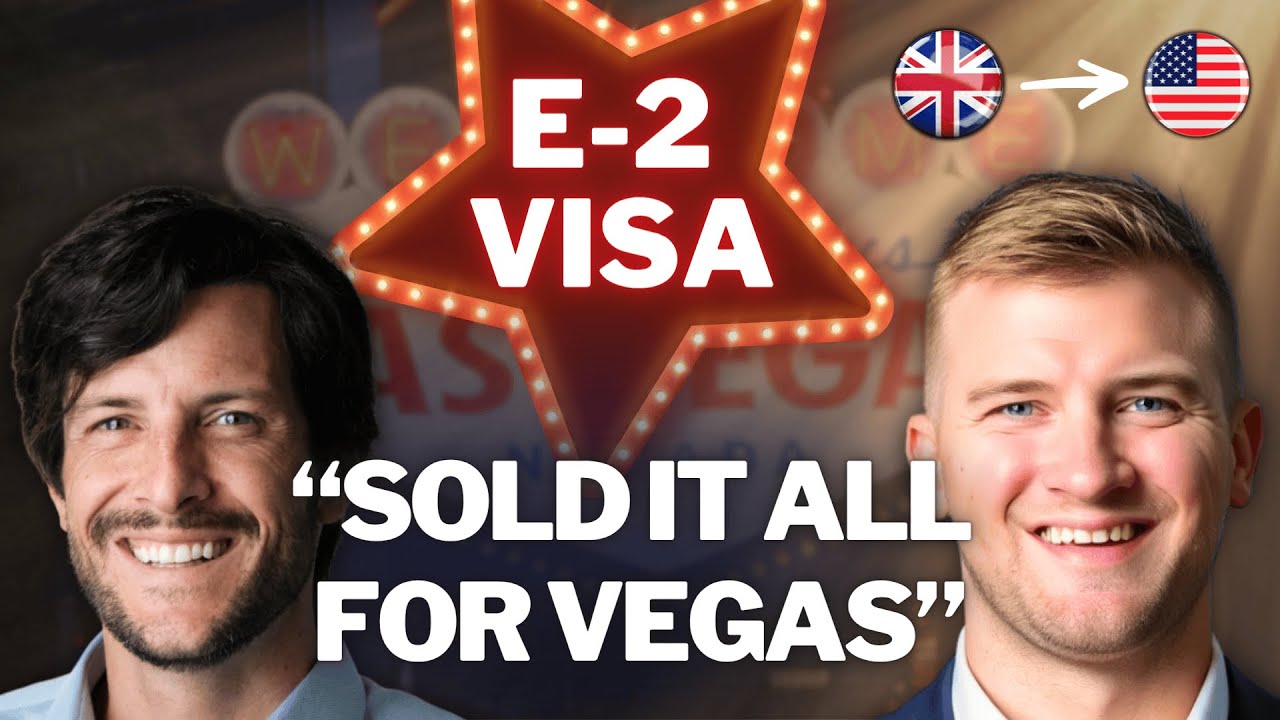
James Hesling of FGC Performance with Patrick Findaro
England E-2 essential employee FGC Performance, Las Vegas

James Hesling

CEO and founder, FGC Performance

"Is it easy? No. Is it stressful? Yes. But it's 100% doable."

James sold his UK facility and brought two investor couples into the U.S. company. Days before submission, the attorney recommended filing him as an essential employee instead. His first Las Vegas hire started before he moved.

Watch his story →

Individual results vary. Outcomes depend on each case and are assessed by the independent immigration attorney.

Included in the program

The U.S. Launchpad™

Your hire lands with an approval and a suitcase. The bank account, the lease, the school, the payroll setup: that is what the Launchpad covers.

Relocation services

Find home. Settle faster.

Relocating a key employee means more than moving boxes. Our specialists guide the area search, connect essential services, and get the family settled.

Find your US path
Relocation services

See whether this path fits your company.

Tell us about the role, the company, and the person you want in it. We walk you through the program and set up the strategy session with the independent immigration attorney, who assesses eligibility.

This program is usually a fit when...

  • You operate a U.S. entity
  • The role is executive, managerial, treaty essential, or specialized knowledge
  • For treaty categories, business and employee share a treaty country nationality
  • For EB-1C, the employee has one year at a qualifying foreign affiliate
  • You want the hire working in the U.S. within 12 months

This is not an eligibility determination. Whether your company and your hire qualify is a legal question, assessed by the independent immigration attorney.

Common questions

Common questions, honest answers.

Does my company have to be a large multinational to sponsor someone?

No. Most of the companies we work with are small and mid-sized. What matters is the structure of the company and the shape of the role, which the attorney reviews in the strategy session.

What is the difference between the nonimmigrant path and EB-1C?

The nonimmigrant path covers temporary work categories. EB-1C is a permanent residency route for an executive or manager with at least one year at a qualifying foreign affiliate. Our scope is the same in both cases; the difference is the petition the attorney files. Which one fits is the attorney's assessment.

Who actually files the petition?

The independent immigration attorney files it. Visa Franchise is a business consulting firm, not a law firm, so the legal work sits with the attorney. We work alongside the attorney throughout, from the introduction and the strategy session to the handoff of every document. On our end we handle the position analysis, the documentation, the clerical preparation for the attorney's use, and the onboarding on both sides of the filing.

How long does the process usually take?

Around six months from signing to a decision, though cases move at the speed of their weakest document. Timelines depend on document readiness, consular availability, and agency processing, none of which we control.

Can the employee bring their family?

Dependent visas are part of the process we support, and our checklists cover the practical side (SSN appointments, driver's licenses, school enrollment). Who qualifies as a dependent and what they can do here are legal questions the attorney answers.